Research + Tools
Original research into how conversational AI shapes human judgement.
Tools that make those mechanisms visible and actionable.
AI may be changing how we think. Our work is about understanding that shift, and making sure people can stay sharp.
Signature research
The Illusion of Intelligence
Why We Believe AI Even When We Shouldn’t
AI outputs are designed to feel credible.
They use confident language, professional structure, and domain terminology that signals expertise. They also behave like a thoughtful conversation partner by acknowledging your context, matching your tone, reflecting your own words and framing back to you in a way that feels like genuine understanding.
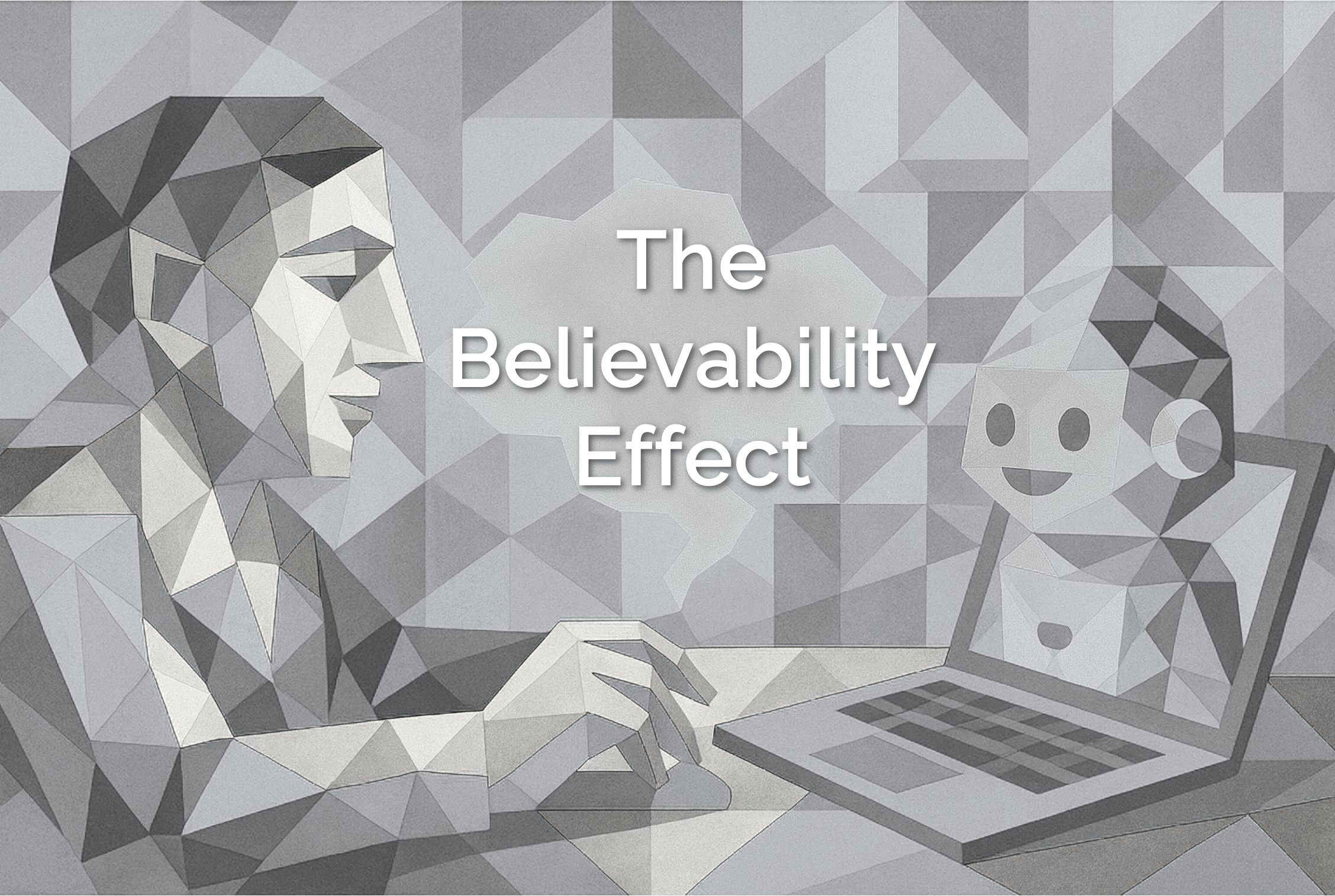
This research examines how these two things work together in conversational AI outputs. The cues that signal authority, and the cues that signal human connection. I call this the Believability Effect: what happens when credibility signals and social signals combine in a single AI-generated response, and what that combination does to human judgement.
The practical question this raises is not whether AI is useful, but whether the people relying on it can tell the difference between a response that sounds right and one that is.
Tool
BE Prompt Mirror
AI responses often reflect your own words and ideas back to you. The language you use to describe your situation, your goals, your constraints.
It reappears in the response, dressed up as insight.
This is prompt mirroring.
It’s one of the core mechanisms of the Believability Effect.
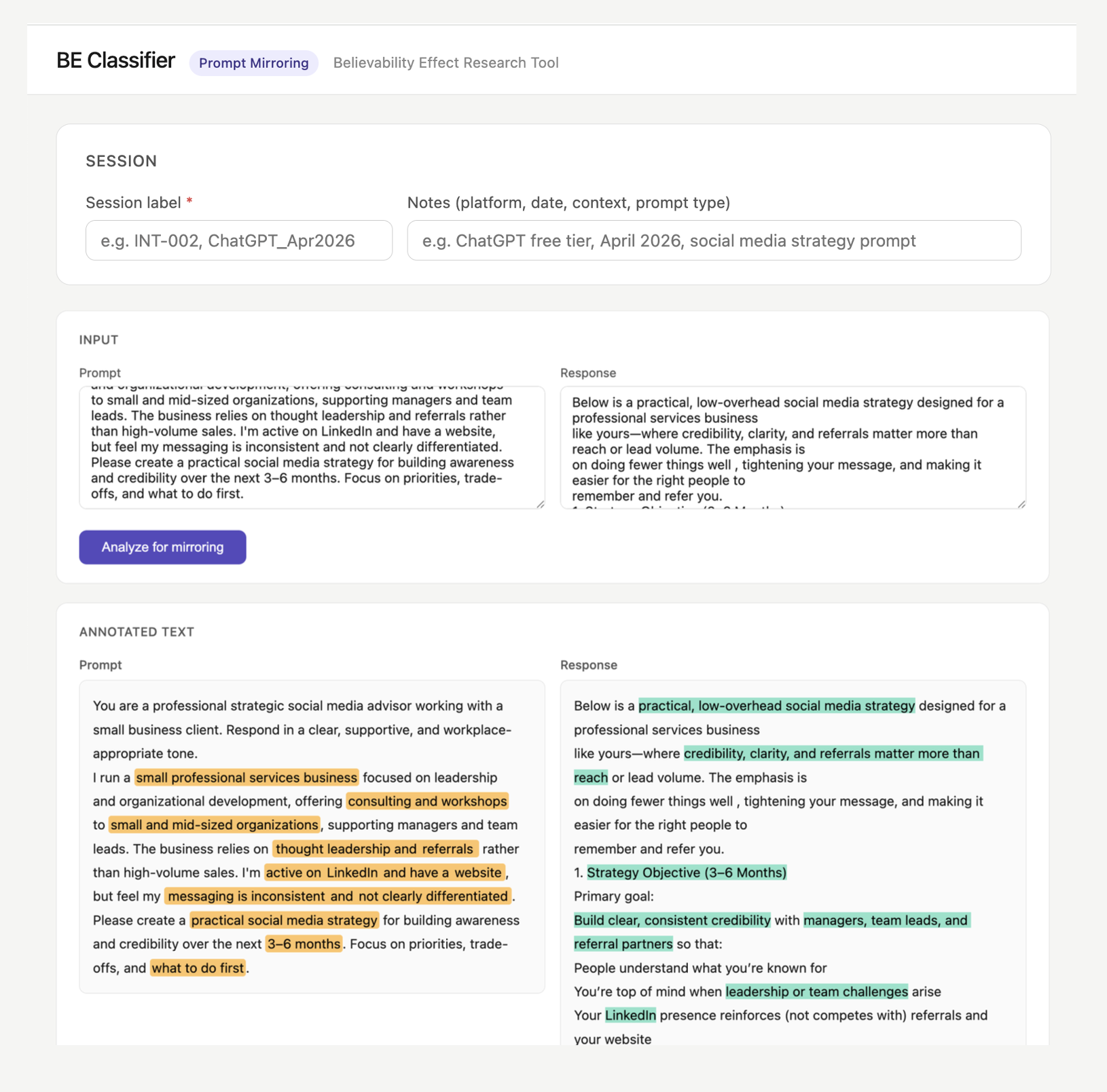
The BE Prompt Mirror makes that visible. Enter a prompt and its AI-generated response, and the tool identifies words and phrases from your prompt that reappear in the response.
It highlights specific instances and shows their distribution across the full output.
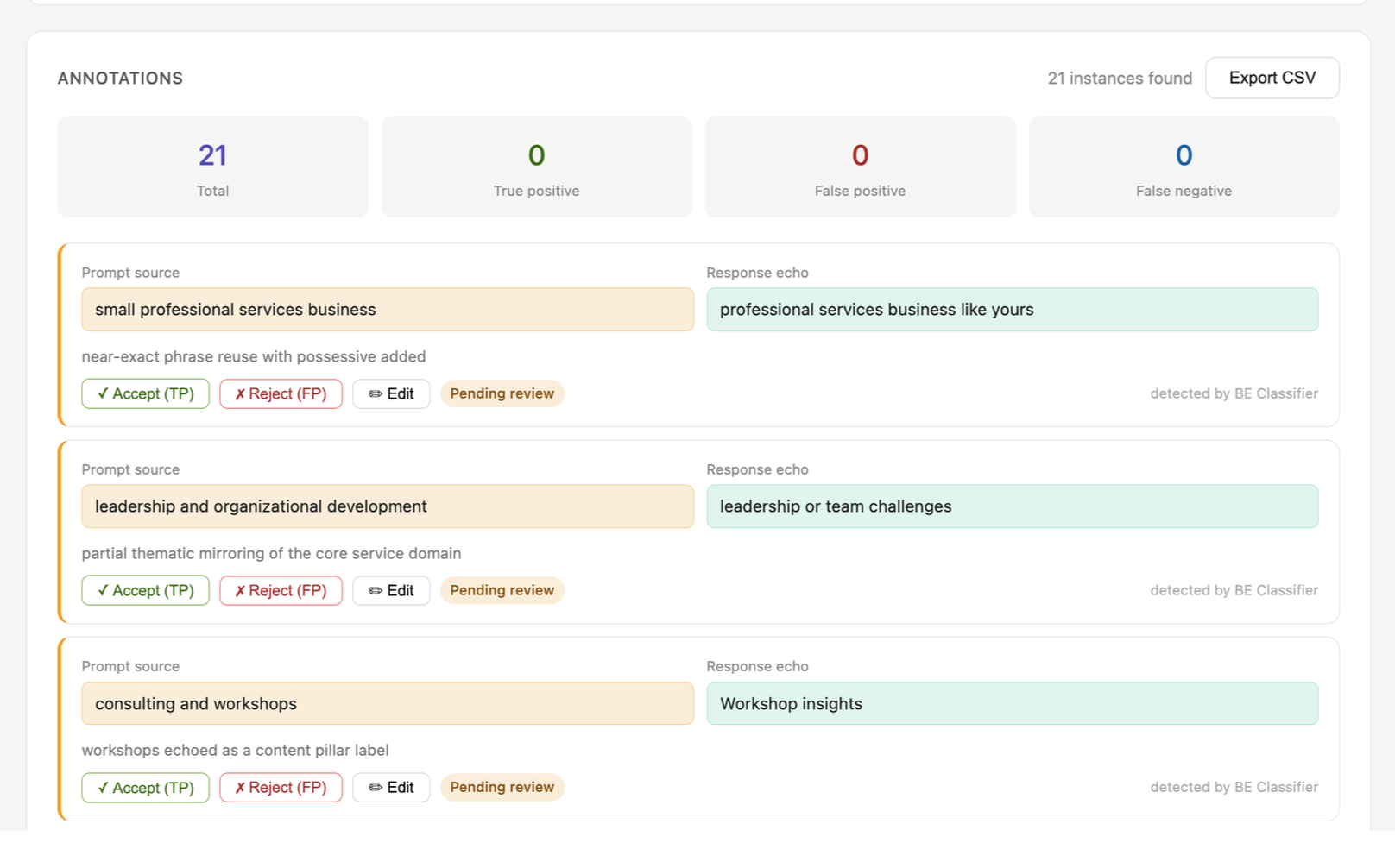
A research validation section lets you review, approve, or reject each label.
Findings export to CSV for further analysis and development of training datasets.
Prompt and response text is not retained. Only the labeled evidence.
Currently a research tool. A shareable version is in development.
In development
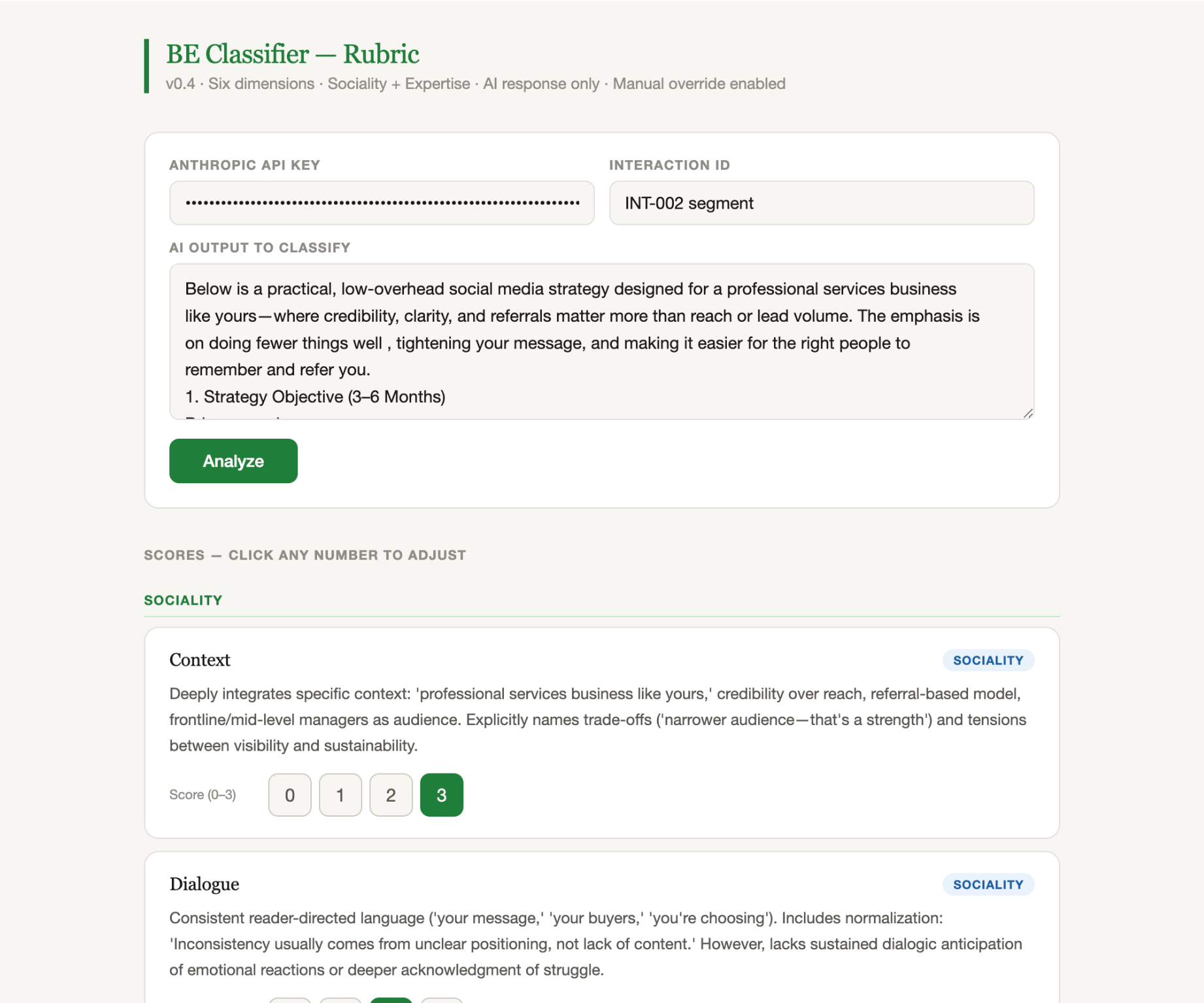
BE Classifier
The BE Prompt Mirror identifies where mirroring occurs. The BE Classifier measures how much believability is present across a full response.
The tool scores an AI response against six dimensions from the Believability Effect framework. Three sociality dimensions (context fit, dialogue, warmth) and three expertise dimensions (structure, reasoning, confidence).
Each dimension receives an AI-generated score with supporting evidence. A researcher override field allows human scoring and interpretive annotation. Score delta between AI and human judgement is calculated and displayed per dimension.
Findings export to CSV. Prompt and response text is not retained. Only the scored evidence.
The schema is designed to support future multi-turn conversation analysis.